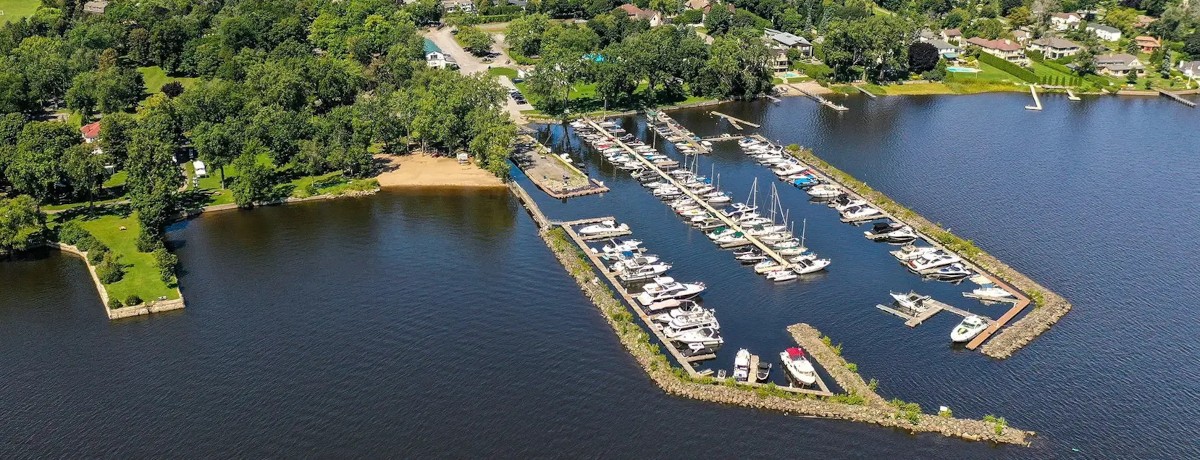
Beaconsfield is one of Montreal's established West Island communities, known for its residential streets, mature trees, proximity to Lac Saint-Louis and a lifestyle that combines suburban space with access to the city.
For buyers searching for a house in Beaconsfield, the appeal is fairly straightforward. The city offers larger properties, established neighbourhoods, parks, recreational facilities and access to commuter rail, while remaining part of the Greater Montreal area.
But what is it actually like to live in Beaconsfield?
Whether you are considering moving from Montreal, looking for a family home on the West Island, downsizing within the area or simply comparing Beaconsfield with other Montreal suburbs, this guide covers what you should know about living in Beaconsfield, including housing, transportation, recreation, schools, lifestyle, real estate and the advantages and disadvantages of the community.
Where is Beaconsfield?
Beaconsfield is located on the western portion of the Island of Montreal along the north shore of Lac Saint-Louis.
It is bordered by Pointe-Claire to the east, Baie-d'Urfé to the west and Kirkland to the north. Its location gives residents access to both the waterfront and the transportation infrastructure connecting the West Island with central Montreal.
The city covers approximately 10.64 square kilometres. According to the 2021 Census, Beaconsfield had a population of 19,277 people living in 6,753 occupied private dwellings.
The City of Beaconsfield describes its development as orderly and well planned, with a landscape characterized by single-family homes, parks and tree-lined streets. The community's roots extend back centuries, although much of its transformation into a residential suburb occurred from the late 1950s onward.
This helps explain one of Beaconsfield's defining characteristics today: it feels distinctly suburban while still being part of Montreal.
What is Beaconsfield like?
Beaconsfield is primarily a low-density residential community.
Instead of the dense streetscapes and apartment buildings found in central Montreal neighbourhoods, much of Beaconsfield consists of detached homes on relatively spacious lots, with mature trees and quiet residential streets.
The city is particularly attractive to buyers who prioritize:
- More living space
- Larger yards
- Established neighbourhoods
- Quiet residential streets
- Parks and green spaces
- Access to the waterfront
- Family-oriented amenities
- Proximity to Montreal
- Access to commuter transportation
The pace of life is generally quieter than in central Montreal. That does not mean there is nothing to do. Beaconsfield has an extensive network of parks, recreational facilities, community programming and cultural services.
The result is a community that can appeal to families, professionals, retirees and buyers looking for more space without leaving the Island of Montreal.
Buying a home in Beaconsfield
Real estate in Beaconsfield is dominated by single-family homes, although condominiums and other housing types are also available.
The local housing market tends to appeal to buyers who are looking for a detached property rather than a downtown-style condominium.
According to Centris, the median sale price for a single-family home in Beaconsfield was $1,027,500 in the second quarter of 2026, down 1% from the same quarter of the previous year. There were 64 single-family home sales during the quarter, while the median price over the preceding four quarters was $975,625.
The market should still be evaluated at the individual-property level. A median price does not tell you what a particular house is worth, since factors such as location, lot size, renovations, condition, construction date and proximity to the waterfront can have a significant effect on value.
For buyers, this means comparing individual properties rather than assuming that the median price represents the price of a typical home.
For sellers, it reinforces the importance of a current comparative market analysis rather than relying solely on an older sale or municipal assessment.
The Montreal Real Estate Market Explained
What types of homes are available in Beaconsfield?
The housing stock is one of Beaconsfield's major attractions.
Buyers will find a variety of detached homes, including older properties built during the community's expansion in the mid-20th century as well as extensively renovated and newer homes.
Some of the housing characteristics buyers may encounter include:
- Mature lots with established landscaping
- Large backyards
- Detached garages
- Driveways and multiple parking spaces
- Finished basements
- Swimming pools
- Homes near parks
- Properties closer to Lac Saint-Louis
- Renovated mid-century homes
- Larger custom-built houses
The condition of homes can vary considerably.
A renovated house may command a substantial premium compared with a property that requires major work. Buyers should therefore consider not only the purchase price but also the potential cost of updating the property.
For example, a home that appears inexpensive compared with neighbouring properties may require a new roof, windows, electrical work, foundation repairs or extensive interior renovations.
A professional inspection is particularly important when purchasing an older home.
Living near Lac Saint-Louis
One of the biggest lifestyle advantages of living in Beaconsfield is access to Lac Saint-Louis.
The city is situated directly along the lake and provides residents with several public access points for non-motorized watercraft. The municipality identifies access points at Angell and Lakeshore, Lakeview and Lakeshore, and St-Louis and Lakeshore.
Residents can enjoy activities such as kayaking, canoeing, paddleboarding and windsurfing.
The city also operates a seasonal storage program for residents' canoes, kayaks and paddleboards at several waterfront parks. For 2026, the storage period runs from May 9 to October 17.
It is important to note that swimming is prohibited at Beaconsfield's public waterfront parks and water access points.
For buyers who specifically want a waterfront lifestyle, properties near Lakeshore Road can offer something very different from a typical suburban home. However, proximity to the lake can also affect pricing, property characteristics and considerations such as flood risk, drainage and municipal regulations.
Parks and outdoor recreation
Beaconsfield has an extensive network of parks and green spaces.
The city maintains numerous neighbourhood parks with playgrounds, sports facilities and open areas. Some parks also provide access to the waterfront.
James Armstrong Park, for example, was redeveloped with accessibility improvements, a shaded rest area, seating and a view toward the lake.
Windermere Park offers a particularly broad range of recreational facilities, including tennis, basketball, baseball, soccer, pickleball, hockey and a skating rink, depending on the season and activity.
This network of parks is one of the reasons Beaconsfield can be particularly attractive to families.
Outdoor recreation is also an important part of the community's identity. The city's parks and green spaces provide opportunities for walking, playing sports, spending time outdoors and enjoying the waterfront.
Recreation and community facilities
Beaconsfield's Recreation Centre provides another major community amenity.
The facility includes a full-size arena, an eight-lane 25-metre pool, a gymnasium and multipurpose rooms.
The city also offers seasonal sports, recreation and cultural programming. Summer 2026 programming, for example, includes activities organized through the city's recreation and cultural services.
This matters for buyers because municipal amenities are part of what makes a community functional beyond the home itself.
When comparing suburbs, it is worth looking at what is available within the municipality rather than focusing exclusively on the property.
Schools and families
Beaconsfield can be an attractive choice for families because of its residential character, parks and access to educational institutions.
The city is served by both French- and English-language public school systems. Beaconsfield's municipal website identifies the Centre de services scolaire Marguerite-Bourgeoys for French-language schools and the Lester B. Pearson School Board for English-language schools.
Families should always confirm the current school boundaries for a specific property before buying. School eligibility can depend on the property's exact address, and boundaries can change.
The same principle applies when evaluating proximity to schools. A property that appears close to a school on a map may not necessarily fall within that school's catchment area.
Getting around Beaconsfield
Transportation is an important consideration when deciding whether Beaconsfield is right for you.
For drivers, Highway 20 provides an important east-west connection through the West Island. Major roads including Saint-Charles Boulevard and Beaconsfield Boulevard provide access to different parts of the municipality.
For commuters, the Beaconsfield train station provides a direct connection toward downtown Montreal.
According to exo, the commuter train connects Beaconsfield station with Lucien-L'Allier station in downtown Montreal in approximately 38 minutes. The station is located between Elm Avenue and Highway 20 and is also served by STM buses.
This can make Beaconsfield particularly attractive to people who want suburban living while maintaining a practical connection to downtown.
However, commuting time depends heavily on your destination, schedule and mode of transportation. If you are considering buying in Beaconsfield because of the train, it is worth doing the actual commute before making a purchase decision.
Beaconsfield for professionals
Beaconsfield can work well for professionals who do not need to be in downtown Montreal every day.
A hybrid worker may appreciate having a larger home office, additional living space and a quieter environment while still being able to commute downtown when necessary.
For someone who needs to commute every day, however, the location may involve a greater time commitment than living closer to central Montreal.
This is one of the most important lifestyle questions to ask before buying:
How often do you actually need to travel into central Montreal?
If the answer is once or twice a week, Beaconsfield's suburban advantages may outweigh the additional commuting time. If you commute downtown five days a week, another neighbourhood may be more convenient.
The advantages of living in Beaconsfield
There are several reasons buyers choose Beaconsfield.
Space
Compared with many central Montreal neighbourhoods, Beaconsfield offers larger homes, yards and lots.
This can be particularly valuable for families, people who work from home or buyers who want outdoor space.
Quiet residential environment
Many streets have a suburban character with mature trees and relatively low-density development.
Waterfront access
Living close to Lac Saint-Louis provides recreational opportunities that are difficult to replicate elsewhere on the Island of Montreal.
Parks and recreation
The city offers numerous parks, sports facilities, community programs and recreational amenities.
Commuter rail
The train provides a direct connection toward downtown Montreal, making the community more practical for commuters than its suburban character might suggest.
Established community
Beaconsfield has been developing as a residential community for decades, resulting in mature landscaping, established streets and a broad range of housing.
The disadvantages of living in Beaconsfield
Beaconsfield will not be the right fit for everyone.
Higher purchase prices
The median price of a single-family home was over $1 million in the second quarter of 2026.
Buyers seeking a detached home may therefore need a significantly larger budget than they would for a condominium or smaller property in other parts of Montreal.
Dependence on a car for some lifestyles
Although commuter rail and bus service are available, many daily errands and activities are easier by car.
Longer commute for some workers
The connection to downtown is practical, but it is still farther from central Montreal than neighbourhoods located on the Island's core.
Less urban density
If you prefer being able to walk from your front door to dozens of restaurants, cafés, bars and shops, neighbourhoods such as the Plateau, Griffintown or downtown Montreal may be a better fit.
This is not necessarily a disadvantage. It is simply a different lifestyle.
What should you consider before buying in Beaconsfield?
If you are considering buying a home in Beaconsfield, look beyond the property itself.
Think about your commute
Test the commute at the time you would actually travel.
Research the exact neighbourhood
Two properties in Beaconsfield can provide very different experiences depending on their proximity to the lake, parks, schools, highways and train station.
Review municipal regulations
If you are planning renovations, additions, landscaping changes, pools, accessory structures or other work, confirm the applicable municipal rules before purchasing.
The City of Beaconsfield specifically advises property owners to ensure that renovation and construction projects comply with applicable bylaws and that the necessary permits or certificates are obtained before work begins.
Consider future maintenance
Large homes and mature properties can require more maintenance than a condominium.
Budget for:
- Roofing
- Windows
- Exterior maintenance
- Landscaping
- Heating and cooling systems
- Foundation and drainage
- Driveways
- Pool maintenance, if applicable
Look at the entire cost of ownership
Your mortgage payment is only one component of owning a home.
Also consider property taxes, insurance, utilities, maintenance and future capital expenses when determining what you can comfortably afford.
Frequently asked questions about living in Beaconsfield
Is Beaconsfield a good place to live?
For buyers who want a quieter suburban environment, larger homes, parks, waterfront access and a connection to Montreal, Beaconsfield can be an excellent choice.
Whether it is right for you depends on your priorities, budget and commuting needs.
Is Beaconsfield good for families?
Beaconsfield's detached homes, parks, recreation facilities and established residential neighbourhoods make it an attractive option for many families.
However, buyers with children should confirm school boundaries for the specific property they are considering.
Is Beaconsfield expensive?
Beaconsfield is generally positioned toward the higher end of Montreal's suburban residential market.
In the second quarter of 2026, the median sale price for a single-family home was $1,027,500.
Individual properties can vary substantially depending on location, lot size, condition, renovations and proximity to the waterfront.
Can you commute from Beaconsfield to downtown Montreal?
Yes.
The Beaconsfield commuter train connects with Lucien-L'Allier station in approximately 38 minutes, according to exo.
Actual door-to-door commuting time will depend on where you live, where you work and your transportation method.
Does Beaconsfield have access to Lac Saint-Louis?
Yes.
Beaconsfield is located along Lac Saint-Louis and provides residents with several public access points for non-motorized watercraft. Swimming is prohibited at the city's public waterfront parks and access points.
Is Beaconsfield part of Montreal?
Beaconsfield is an independent city located on the Island of Montreal and is part of the Montreal metropolitan area.
For buyers searching for "Montreal suburbs," "West Island real estate" or "homes near Montreal," Beaconsfield is therefore an important community to consider.
Is Beaconsfield right for you?
Living in Beaconsfield is ultimately about choosing a particular lifestyle.
It offers space, established neighbourhoods, mature trees, parks, waterfront access and suburban comfort while remaining connected to Montreal by road and commuter rail.
The trade-off is that you generally give up some of the walkability and urban density found in central Montreal. Detached homes can also require a substantial budget, particularly in today's market.
For the right buyer, however, that trade-off can make sense.
If your priorities include a larger home, outdoor space, access to recreation and a quieter residential environment, Beaconsfield deserves serious consideration. If your priorities are nightlife, dense walkability and being steps from downtown, another Montreal neighbourhood may be a better fit.
The best way to determine whether Beaconsfield is right for you is to look beyond the general reputation of the city and evaluate individual properties, neighbourhoods, transportation options, schools and your long-term plans.
The current market also demonstrates why local knowledge matters. In the second quarter of 2026, Beaconsfield recorded 64 single-family home sales, with a median sale price of $1,027,500. At the same time, the preceding four quarters produced a median of $975,625. These figures provide useful context, but they do not replace an analysis of the specific property you are considering.
Whether you are looking for a family home, a property near the water, a quieter place to work from home or simply more space on the Island of Montreal, Beaconsfield offers a distinctive combination of suburban living and Montreal accessibility.
If you're thinking about buying or selling real estate in Montreal or anywhere in Quebec, I'd be happy to help. Call me at 514-777-1535 or email Christopher@CCMRealty.ca to discuss your real estate goals.