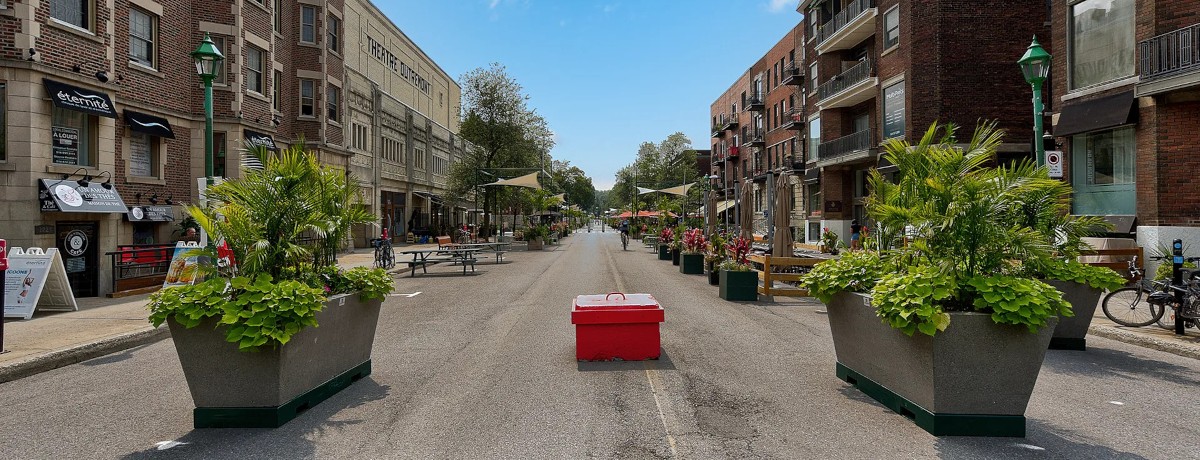
Outremont is one of Montreal's most distinctive residential neighbourhoods. Located immediately north of Mount Royal and just west of the Plateau, it combines historic architecture, mature trees, parks, independent shops, restaurants and a strong neighbourhood atmosphere.
For buyers looking for a central Montreal location without the feel of a downtown high-rise district, Outremont can offer an appealing combination of urban convenience and residential character.
The neighbourhood is also unusually diverse from a real estate perspective. You can find traditional Montreal plexes, century-old townhouses, detached homes, condominiums and newer developments, including housing around the Université de Montréal's MIL campus.
But living in Outremont is not simply about finding a beautiful property. Buyers should understand the differences between its micro-neighbourhoods, the age and condition of its housing stock, transportation options, renovation regulations and the costs associated with owning an older property.
This guide looks at what it is like to live in Outremont and what buyers should know before purchasing a home or condo in the neighbourhood.
What Is Outremont Like?
Outremont has a distinctly residential character despite being close to some of Montreal's busiest areas.
The borough has a population of roughly 25,000 residents and covers only about 3.9 square kilometres, creating a relatively dense urban environment. The City of Montreal describes Outremont as a predominantly residential and institutional area near downtown, known for its parks, urban forest, architectural heritage and proximity to Mount Royal.
One of the neighbourhood's defining characteristics is its architecture.
A large proportion of Outremont's housing stock dates from before 1960. Centris reports that approximately 70% of the area's housing was constructed before 1960, with smaller proportions built during later decades.
That age contributes significantly to Outremont's character, but it also means buyers need to pay attention to maintenance, building systems and renovation requirements.
What Makes Outremont Attractive to Buyers?
Outremont appeals to people who want a central location but place a high value on neighbourhood atmosphere.
Some of the area's most notable advantages include:
- Mature streets lined with trees
- Proximity to Mount Royal
- Numerous parks and green spaces
- Independent shops and restaurants
- Attractive historic architecture
- Access to public transportation
- Proximity to universities and major institutions
- A strong pedestrian-oriented neighbourhood environment
- A wide variety of housing types
- Convenient access to other central Montreal neighbourhoods
The City of Montreal identifies 13 parks, five mini-parks, an outdoor pool, seven outdoor skating rinks and several public facilities within the borough.
For many residents, however, the biggest attraction is the combination of these amenities. Outremont can feel like a traditional residential neighbourhood while remaining firmly within central Montreal.
The Main Commercial Areas of Outremont
One of the advantages of living in Outremont is that many daily errands can be done within the neighbourhood.
Avenue Bernard
Avenue Bernard is one of Outremont's best-known commercial streets.
The area combines restaurants, shops, cafés and cultural destinations with attractive residential streets. The pedestrian area and public spaces contribute to its neighbourhood atmosphere, while the Théâtre Outremont remains an important cultural landmark.
For buyers, proximity to Bernard can be particularly attractive if walkability and access to local businesses are priorities.
Avenue Laurier Ouest
Laurier Ouest offers another distinct commercial environment, with restaurants, specialty shops and services occupying predominantly low-rise buildings.
The street has a more upscale commercial character and provides convenient access to both Outremont and neighbouring areas.
Avenue Van Horne
Van Horne is another important commercial and transportation corridor.
The City identifies Van Horne as one of Outremont's principal arteries, with a variety of businesses and services as well as access to public transit.
The character of the property can change considerably depending on how close you are to these commercial arteries, so buyers should visit potential properties at different times of day before making a decision.
What Types of Homes Are Available in Outremont?
Outremont's housing stock is one of the reasons the neighbourhood attracts such a wide range of buyers.
According to Centris, approximately 57% of housing units are in buildings of fewer than five storeys, while about 21% are in buildings of five storeys or more. Approximately 8% are single-family homes and 15% are semi-detached or row houses.
In practical terms, buyers can encounter:
- Detached houses
- Semi-detached homes
- Townhouses
- Duplexes and triplexes
- Traditional Montreal plexes
- Converted condominiums
- Newer condominium developments
- Larger luxury condominiums
- Rental properties and small income properties
This diversity means that the Outremont real estate market cannot be understood through a single average price.
A renovated detached home and a condominium in a converted triplex may both be located in Outremont but appeal to completely different buyers and have very different ownership costs.
What Does Real Estate Cost in Outremont?
Outremont is one of Montreal's higher-priced residential areas, particularly for detached houses and larger properties.
Centris data for the four quarters ending in the third quarter of 2026 show a median single-family home price of approximately $2.30 million. For condominiums, the median price over the same period was approximately $776,875.
The same data show that 67 single-family homes and 154 condominiums sold over the preceding four quarters.
The condominium market is therefore considerably more active in terms of transaction volume than the single-family market.
These statistics should be used as context rather than as a valuation tool. Individual properties can differ substantially depending on location, size, condition, renovations, parking, outdoor space, building quality and other characteristics.
For a broader explanation of Montreal's real estate market, see The Montreal Real Estate Market Explained
What Are the Best Parts of Outremont to Live In?
There is no single best section of Outremont because the right location depends on what you value.
Around Avenue Bernard
This area is particularly attractive for buyers who prioritize restaurants, cafés, shops, culture and a walkable neighbourhood environment.
Around Laurier Ouest
Laurier Ouest can appeal to buyers who want easy access to higher-end shops and restaurants while remaining in a primarily residential setting.
Near Mount Royal and Côte-Sainte-Catherine
The southern and western portions of Outremont offer particularly strong access to Mount Royal and several green spaces.
Parc Beaubien, for example, provides outdoor recreation and seasonal activities, while Mount Royal itself offers extensive trails, green spaces and year-round recreational opportunities.
Nouvel Outremont and the MIL area
The northern and northeastern portions of Outremont have experienced significant change around the Université de Montréal's MIL campus.
The City describes the MIL project as a 38-hectare transformation designed as a mixed, sustainable neighbourhood oriented toward public and active transportation.
This part of Outremont can feel different from the historic core, with newer construction and a more recent urban development pattern.
Is Outremont Good for Families?
Outremont can be particularly attractive to families who want a central Montreal location with access to parks, schools, services and larger homes.
The neighbourhood has numerous parks and recreational facilities, including playgrounds, skating rinks and community facilities. Parc Outremont and Parc Raoul-Dandurand are examples of smaller neighbourhood parks, while Mount Royal provides much larger green spaces nearby.
Families should nevertheless investigate schools on a property-by-property basis.
School eligibility and access depend on the specific address, school board and other applicable criteria. A property being located in Outremont does not automatically mean that every nearby school is available to every household.
How Easy Is It to Get Around Outremont?
Transportation is one of Outremont's major advantages.
The borough has two metro stations, along with bus routes and access to major streets connecting it to other parts of Montreal. The City specifically identifies the Outremont metro station and bus services along Van Horne as important transportation resources.
The neighbourhood is also well suited to walking and cycling, particularly around its commercial streets and residential grid.
For buyers who commute downtown or to one of Montreal's universities, location within Outremont can significantly affect how convenient daily transportation feels.
A property a few blocks from a metro station can offer a very different experience from one farther north or closer to the mountain.
What Should You Know About Renovating an Outremont Property?
This is one of the most important considerations for buyers.
Outremont contains a significant amount of older housing and properties with architectural or heritage interest. As a result, renovation possibilities cannot always be assessed simply by looking at the physical condition of a property.
Montreal requires permits or authorization for many renovation and construction projects, and additional standards can apply to buildings with heritage status or properties located in areas subject to special planning requirements.
For example, a buyer considering:
- Replacing windows
- Modifying exterior doors
- Adding an extension
- Changing the exterior appearance
- Altering structural elements
- Converting or reconfiguring spaces
- Undertaking significant exterior renovations
should verify the applicable requirements before assuming the project will be permitted.
The City specifically advises owners to contact the borough permit counter before beginning renovation projects.
This is particularly important in Outremont because preserving architectural character is an important part of the borough's identity.
A practical example
Imagine you find a century-old Outremont home with beautiful original windows, but you are planning to replace them with modern units.
Before budgeting for the project, determine whether the property has heritage status or is subject to specific architectural requirements.
The work may require additional documentation or authorization, and the permitted materials or design may be restricted.
A buyer who investigates this before purchasing can avoid building a renovation budget around a project that may not be approved.
For more information about preparing a property for ownership and future resale, see Fall Home Maintenance Checklist for Montreal Homeowners
What Are the Advantages of Living in Outremont?
Outremont offers several characteristics that are difficult to replicate elsewhere in Montreal.
Strong neighbourhood identity
The combination of architecture, parks, commercial streets and mature trees creates a distinctive environment.
Central location
You remain close to downtown, Mount Royal, universities, the Plateau, Mile End and other central neighbourhoods.
Excellent access to green space
Mount Royal and numerous local parks provide substantial recreational opportunities.
Diverse housing options
Buyers can choose from condominiums, plexes, townhouses and detached homes.
Walkable lifestyle
Many residents can reach restaurants, shops, cafés and services without relying on a car for every trip.
What Are the Potential Disadvantages of Living in Outremont?
Outremont is not necessarily the right fit for every buyer.
Potential considerations include:
- Higher property prices than many Montreal neighbourhoods
- Older buildings that may require significant maintenance
- Renovation restrictions on certain properties
- Limited availability of detached homes
- Competition for particularly desirable properties
- Potentially higher costs associated with heritage-quality renovations
- Parking considerations in a dense urban environment
The age of the housing stock is especially important.
An older home may have beautiful architectural details but also require attention to the roof, foundation, masonry, windows, plumbing, electrical systems and other building components.
Buyers should therefore evaluate the property as a complete building rather than focusing exclusively on its interior finishes.
What Should Buyers Check Before Buying in Outremont?
A good Outremont purchase involves more than comparing asking prices.
Before making an offer, consider:
1. The building's condition
For older properties, investigate the roof, foundation, masonry, windows, electrical system, plumbing and heating.
2. Renovation history
Ask which renovations were completed, when they were completed and whether the required permits were obtained.
3. The certificate of location
Make sure additions, exterior structures and other relevant features are properly reflected.
4. Heritage and zoning restrictions
If you are planning future renovations, investigate the property's regulatory status before making an offer.
5. Parking
Determine whether parking is included, whether it is deeded or shared and whether street parking meets your needs.
6. Noise and traffic
Visit at different times of day. A quiet residential street can feel very different from a property near a commercial corridor.
7. Proximity to services
Think about how far you will actually travel for groceries, schools, public transportation, parks and other daily needs.
For buyers unfamiliar with Montreal's neighbourhoods, comparing Outremont with other areas can also be useful. See Best Neighborhoods in Montreal for Buyers
Is Outremont a Good Investment?
Outremont can be an interesting market for investors and owner-occupants, but investment potential should be evaluated property by property.
The neighbourhood's established residential character, central location, diverse housing stock and proximity to major institutions are important factors.
At the same time, purchase prices can be high, particularly for detached houses. That means investors should carefully examine acquisition costs, rental income, operating expenses, financing, taxes, maintenance and the property's long-term potential.
The market data also demonstrate why broad neighbourhood averages can be misleading. Over the four quarters ending in the third quarter of 2026, the median condominium price was approximately $776,875, while the median single-family price was approximately $2.30 million. These are fundamentally different property categories with different investment profiles.
For buyers specifically interested in real estate investment, see Best Areas in Montreal for Real Estate Investment
Frequently Asked Questions About Living in Outremont
Is Outremont an expensive neighbourhood?
Outremont is generally considered one of Montreal's more expensive residential neighbourhoods, particularly for detached houses and larger properties. Recent Centris data show a four-quarter median price of approximately $2.30 million for single-family homes and $776,875 for condominiums.
Is Outremont a good place to live?
Outremont offers a combination of residential streets, historic architecture, parks, shops, restaurants, public transportation and proximity to Mount Royal. Whether it is the right neighbourhood depends on your lifestyle, housing needs and budget.
Is Outremont good for families?
Yes, the neighbourhood offers parks, recreational facilities, schools and a variety of larger housing options. However, buyers should verify school eligibility for the specific property they are considering.
Is Outremont walkable?
Many parts of Outremont are highly walkable, particularly around Bernard, Laurier Ouest and Van Horne. Access to local businesses and services is one of the neighbourhood's advantages.
Are there detached houses in Outremont?
Yes. Detached houses represent a relatively small portion of the overall housing stock, but they are an important part of the higher-end residential market. Centris data show a four-quarter median price of approximately $2.30 million for single-family homes through the third quarter of 2026.
Are Outremont homes mostly old?
A significant portion of the housing stock is older. Centris reports that approximately 70% of housing was built before 1960. This contributes to the neighbourhood's architectural character but also makes building inspections and maintenance planning particularly important.
Can I renovate a house in Outremont?
In many cases, yes, but the work may require permits and certain properties are subject to additional heritage or architectural requirements. Buyers should verify the applicable regulations with the borough before purchasing a property based on a planned renovation.
Is Outremont close to downtown Montreal?
Yes. Outremont is a central Montreal neighbourhood located close to downtown, Mount Royal, the Plateau, Mile End and several major institutions.
Is Outremont a good place to buy a condo?
Outremont offers a broad selection of condominium properties, from converted historic buildings to newer developments. Buyers should compare not only the purchase price but also condo fees, reserve fund health, building maintenance, upcoming work and the location within the neighbourhood.
Final Thoughts: Is Living in Outremont Right for You?
Living in Outremont is about more than buying a property in an expensive Montreal neighbourhood.
It is about choosing a particular style of urban life.
You can walk to a neighbourhood restaurant on Avenue Bernard, spend an afternoon in one of the local parks, access Mount Royal, commute by public transportation and return home to a street lined with mature trees and historic architecture.
At the same time, owning property in Outremont requires a realistic understanding of the neighbourhood's older housing stock, renovation regulations and property values.
For buyers, the most important step is to look beyond the address.
Examine the specific street, building, property condition, transportation access, parking situation and potential renovation requirements. Two properties only a few blocks apart can offer very different experiences and ownership costs.
The neighbourhood's real estate statistics also show why property type matters. The four-quarter median price through the third quarter of 2026 was approximately $2.30 million for single-family homes compared with $776,875 for condominiums. These figures provide useful context, but they cannot replace a property-specific analysis.
For homeowners considering a sale, understanding the local market and the characteristics that buyers value in different parts of Outremont is equally important.
Ultimately, Outremont remains a distinctive option for people who want central Montreal living combined with architectural character, green space, local commerce and a strong residential identity.
If you're thinking about buying or selling real estate in Montreal or anywhere in Quebec, I'd be happy to help. Call me at 514-777-1535 or email Christopher@CCMRealty.ca to discuss your real estate goals.